

If the housing system were software, we’d be running it on legacy code held together by duct tape and hope. Projects stay custom, approvals pile up, productivity drops and the backlog grows. The issue isn’t one glitch; the system needs a rebuild.
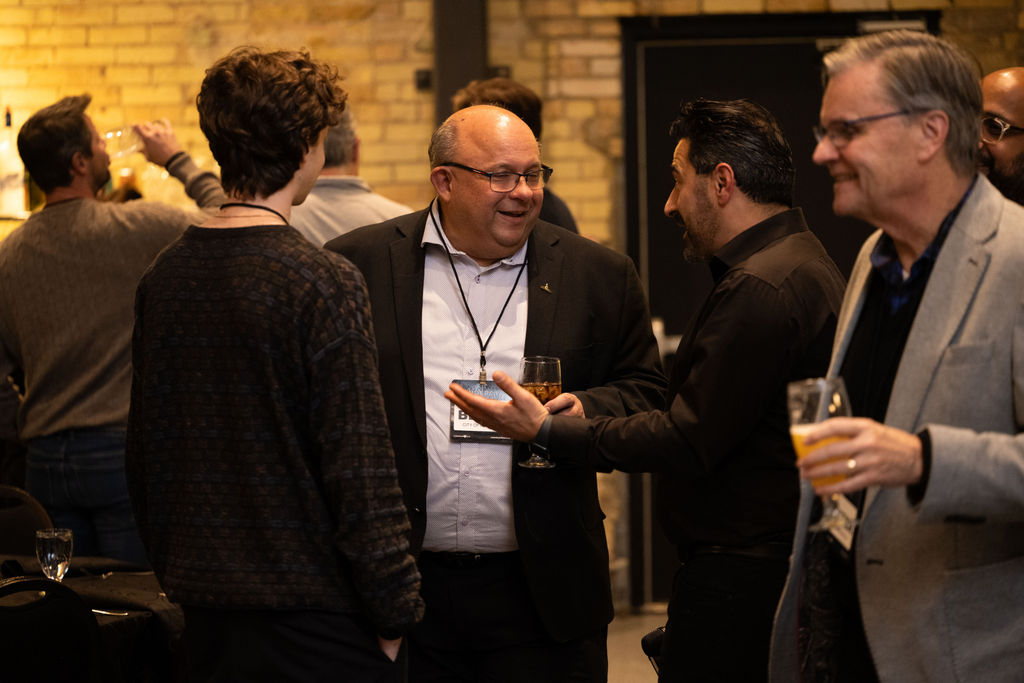
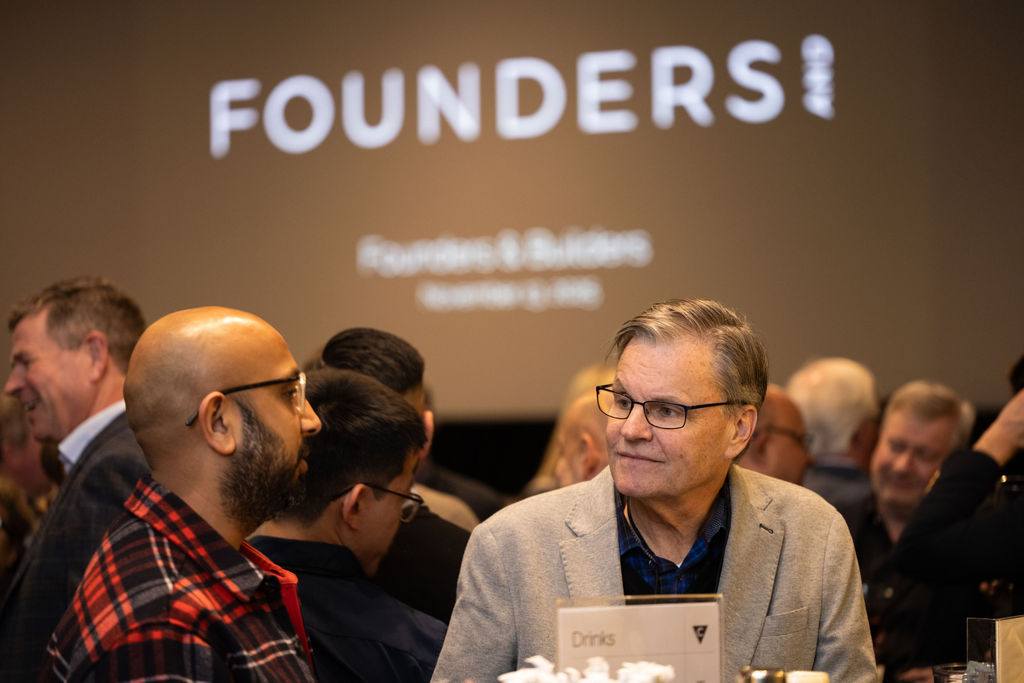
That’s where the conversation picked up at Founders and Builders last night, hosted by Nabil G. Fahel, Vice President, Community Activation at Communitech. The Tannery Event Centre was packed with tech leaders, policymakers and community builders who shared a meal and a candid discussion about a system that can’t keep pace with a fast-growing region.
There was a sense of urgency in the room. Waterloo Region is growing and the housing supply keeps falling further behind.
Two leaders helped make sense of why.
-
Scott Higgins, President of HIP Developments, has more than 20 years of experience in real estate and corporate finance, and generational roots in Cambridge. His work focuses on public spaces and community confidence as much as the buildings themselves.
-
Heather Campbell, President of Vive Development and COO of Oranj Constructors, sees the maze behind every project. She sees how slow processes, changing policies and outdated methods collide to stall progress. Housing matters to her because it impacts everything from daily life to long-term economic growth.
Their message hit hard. When these pressures collide, the system stalls. Productivity drops, costs rise and years-old plans crash into new realities. The boom-bust cycle keeps spinning and builders can’t break it alone.

Why is housing so expensive?
The core issue is that the process behind housing hasn’t kept up with how people live today. Productivity has been falling for decades. Buildings are still treated as one-off custom projects. Approvals, design decisions and manual work pile on time and cost. Even when demand softens for a moment, the fundamentals don’t change. Canada still has the lowest number of homes per capita in the G7.
“We need to fundamentally re-engineer the housing system.” – Scott Higgins
Developers plan years ahead, and those long timelines often collide with markets that shift faster than expected. Household patterns are also changing. More people are sharing space, staying with family longer or looking for two-bedroom options because affordability is stretched thin.
Trust is another gap. After years of added rules and repeated steps, stakeholders don’t always trust others in the process to move things forward without duplication. That leads to more process, more checkpoints and slower timelines.
Scott shared the example of Build Now, a big, community-led effort to help fix the housing crisis in Waterloo Region and make it easier for people who live and work here to actually live here. Led by Habitat for Humanity, the goal is to build 10,000 affordable homes by 2030; places that middle-income people can actually afford, at about half the usual price, and that stay affordable long-term. Trust, he says, is what moved the project forward when nothing else could.
“We need innovation. The market is primed for disruption.” – Heather Campbell
Instability makes innovation hard
The guest speakers talked about how constant policy changes make it hard for builders to plan or try new ideas. Decisions are often made without understanding how housing economics (“real estate math”) actually work. Young people are losing hope in ever finding stability, and that’s just as damaging as rising prices.
But the room lit up when the conversation turned to solutions.
Both speakers pointed to big opportunities for tech and manufacturing, including standardized components, off-site fabrication, AI-supported building design and digital tools that can help reduce manual bottlenecks. Construction moves slowly, which makes it ripe for disruption. And Waterloo Region has the talent to take that on.
“The crisis isn’t coming. It’s already here.” – Scott Higgins
A question from the audience asked how bad the situation needs to get before there’s a solution. The answer was that the crisis isn’t coming, it’s already here. But crisis also creates urgency. It pushes people to collaborate differently and builds trust faster.
Why it matters to Waterloo Region
Waterloo Region is on track to reach one million people by 2051.
Talent chooses municipalities with stability. Employers need workers who can afford to stay. And this community has a long history of collaborating to take on big challenges.
If we’ve been living inside a system held together by duct tape fixes and decade-old habits, last night showed the power of taking a step back and examining the whole structure. Change begins when people choose to show up.
If you want to see what happens when community and tech share the same table, join the conversations happening at Communitech.